

The BaleDoneen Method® ushers in a cure to bring an end to cardiovascular disease

Imagine if the many chronic health conditions that harm and kill millions of people every year could be traced back to a single event within the body. Think of the implications – instead of chasing after the myriad outcomes and tackling them with diverse and occasionally successful interventions, we could target the cause.

Two American senior specialists in cardiovascular care have spent the last twenty years combining their different areas of expertise to focus on arterial disease. They have seen how heart attacks, strokes, and other chronic diseases of ageing – such as dementia, heart failure, kidney failure, peripheral arterial disease, erectile dysfunction, and loss of vision – can all be traced back to arterial disease. The team have gone one step deeper and designed a medical approach that addresses a specific source event behind arterial disease. Their robust approach is having a positive impact
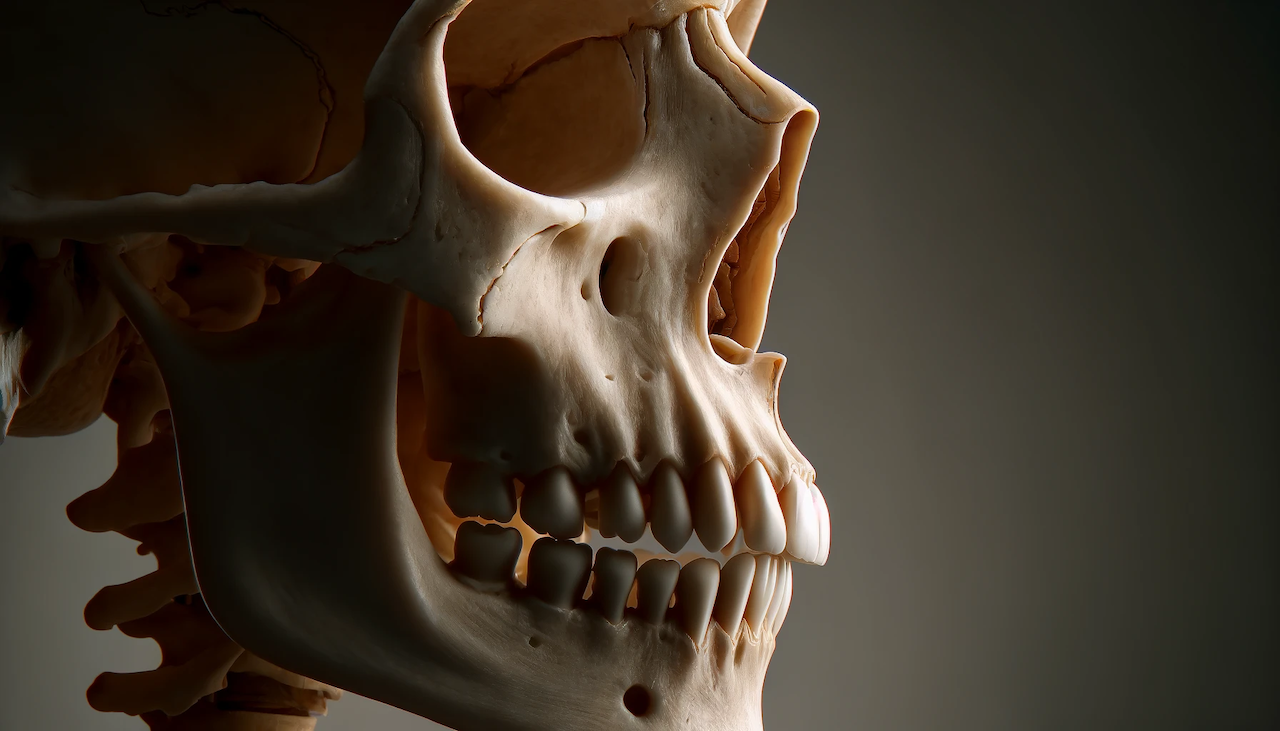
Orthognathic surgery: Tackling deceptive complexity

Outside of our brain, few physical characteristics of homo sapiens differ from our ancestors and fellow large apes more than our jaw. Beyond its obvious key functions of eating and breathing, the jaw is a critical component in our ability to communicate through speech. It also looks different – it is narrower than in other apes, plus humans have a chin. The jaw is also an essential part of the aesthetics of our face – it is one of the most observable parts of our bodies. Given the jaw’s evolutionary significance in defining our human identity, it may come as a surprise that the branch of medicine dedicated to its correction — orthognathic surgery – is relatively new. One senior dental academic is helping raise its profile and emphasise the key role of collaboration in its continued development.

You can read the rest of this

Human Systems Integration, it’s time to take centre stage

There is an old engineering design joke, probably more a wry observation, that the most dangerous component to a motor vehicle is the nut holding the steering wheel. On its own, a motor vehicle is an inert, albeit highly complex, technological system. It takes people, also a highly complex sociotechnical system, to activate and apply its purpose. However, that purpose does not necessarily need to be part of its original design – a car can transport its occupants safely, efficiently, and comfortably, but it can also kill. As humans and technology converge, making sense of the resulting combined complexity is the focus of an interdisciplinary field called human systems integration, or HSI.

You can read the rest of this article, complete with additional feature content, on the Research Features website here. (Opens in a new tab)

Spektr-UF:Unlocking the secrets of UV

For most of us, what we know of the marvels of space lies in what we can see, with or without optical telescopes. However, the majority of the Universe’s secrets are hidden from view, buried within the furthest reaches of light’s spectrum and other electromagnetic radiation. For astronomers, using telescopes to observe such extreme forms of radiation allows them to get a far more detailed view of the Universe. In the near future, that view will come to life, courtesy of a complex array of instruments currently being built by Russia in collaboration with Spain, Germany, and Japan. Once completed, the Spektr-UF, also known as the World Space Observatory–Ultraviolet (WSO-UV), will scan the Universe’s ultraviolet (UV) wavelength signals to see what it can find. Astronomers can hardly wait.

You can read the rest of this article, complete with additional feature content, on the Research Features

Avoiding Armageddon: The urgent search for near-Earth objects

In 1998, American actor Bruce Willis blew up an asteroid and himself to save Earth’s inhabitants from extinction. The asteroid in question, roughly the size of Texas, was fictional, but the film, Armageddon, encouraged the millions who watched it to consider the actual scenario of a strike by one of the many celestial bodies that brushes past us. The film was inspired by a convention of leading scientists a few years earlier. Ever since, decisions made at that convention have guided international efforts to take action when a rogue asteroid has Earth in its sights.

It’s tempting to think there’s little in Earth’s path as it hurtles through space, but in reality, it must dodge innumerable obstacles. Space is not a wilderness; it bristles with all manner of activity. Much of it stays far away, but some travel to our neck of the woods. Some we

Imperial SCARU: Inspiring an evolutionary leap in healthcare

On 5 July 2023, the UK’s National Health Service (NHS) turned 75. It was a moment for deep national re-examination. The UK public has a strange and strained relationship with the NHS, simultaneously calling for urgent changes, yet also warning, ‘Don’t mess with the NHS’. The reality is that, since the inception of the NHS – still the most popular institution in Britain – two major shifts have impacted healthcare: global public health priorities have changed, and technology has evolved such that it permeates every aspect of our lives. Combine the two, and you have not only a need to transform healthcare provision but also have significant ways to do it. A team of researchers at Imperial College London are at the forefront of this conjectural nexus, inspiring an evolutionary leap in how healthcare is conceptualised: where the self-carer, health, wellbeing and healing are the main focus, as opposed to a system

The perpetual motion of digital scholarly preservation

It’s fair to say most researchers don’t do what they do for the money. Instead, what drives them is their passion for contributing to the scholarly record. This ‘record’ is not a simple sequential chronicle of academic information. Instead, it is an ever-expanding, highly interconnected network of all human knowledge racing outwards in myriad directions. Scholars build upon the work of those who published before so that those who follow them may do the same. Those tasked with curating such knowledge can never rest because the responsibility of preserving scholarly knowledge is immense, and since becoming progressively digital, it has become increasingly mercurial, and the demands on their skills more intense.

You can read the rest of this article, complete with additional feature content, on the Research Features website here. (Opens in a new tab)

Making sense of immigrant work integration in Canada

For immigrants arriving in a new country, the excitement for a new beginning can be overshadowed by the multiple anxieties that accompany integrating into sometimes vastly different living and working environments and cultures. This is especially true for highly qualified immigrants (QIs) – generally highly skilled immigrants with a foreign post-secondary education who relocate to another country to work and live. It would be fair to assume that countries looking to boost their skilled workforce would embrace such talent. However, for QIs, this is often not the case, and it could boil down to the complexities of sensemaking. Two Canadian scholars from diverse, but associated, fields of study have published research that shines a light on sensemaking amongst QIs and the multiple stakeholders they interact with. Their research could transform our understanding of the challenges facing immigrants.

You can read the rest of this article, complete

UNBSSI – planting the seeds of space exploration

There are two indisputable yet oft-forgotten facts about space exploration: space belongs to no one, and you don’t need to enter space to study its immense wondrousness. For centuries, cultures across the world have stared up at the night sky and wondered what lies among the stars. Exploring space needs a keen eye, an inquiring mind, a basic understanding of any of the space sciences, and access to some of the troves of data pouring in from space every day. Knowing this, one organisation within the United Nations is quietly and resolutely expanding the frontiers to space exploration by making education, teaching, and research a key part of its focus. In the process, it has bridged the perceptual and infrastructural barriers around reaching out to space and highlighted the benefits of networking and sharing knowledge.

You can read the rest of this article, complete with

Learning from people who inject drugs

It’s convenient to dismiss people who inject drugs (pwid) as criminals or, at best, the victims of their own bad decisions. But this approach not only eschews our responsibility to help marginalised and vulnerable people, it also keeps us impervious to broader social issues. Top-down, authoritarian policies steered by legal priorities don’t address these issues, and those based on medical knowledge, even with the best intentions, risk being condescending and unhelpful. The alternative is to listen to the people the policies are supposed to support. That is precisely what two senior public health researchers did. What they discovered was a series of recurring themes that challenge our biases and give clearer direction for co-designed harm-reduction approaches.

You can read the rest of this article, complete with additional feature content, on the Research Features website here. (Opens in a new tab)